Are Self Driving Cars the future
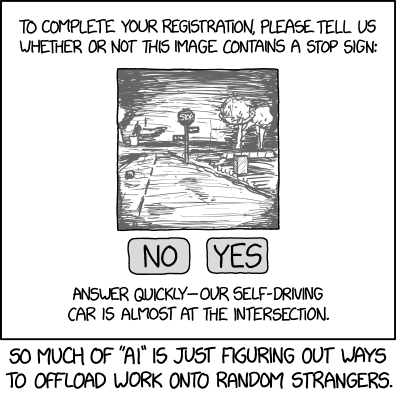
It's 2022, and surprisingly, we still haven’t come close to achieving a fully functional self-driving car. Back in the 80s and 90s, people imagined a future filled with flying cars and autonomous vehicles. Instead, we find ourselves watching viral videos of cats and dogs while the myth of the self-driving car remains confined to sci-fi films and dystopian novels. However, from a technological standpoint, we are closer to realizing self-driving cars than ever before.
The Progress and Potential of Self-Driving Technology
The recent introduction of adaptive cruise control in various car models has brought us closer to a future where driving tests might become obsolete. This technology allows cars to automatically adjust their speed to maintain a safe distance from vehicles ahead, showcasing a step towards full automation.
Why Are We Pursuing Self-Driving Technology?
Several factors drive the push towards self-driving technology. One significant motivation is the environmental impact of traditional petroleum and diesel-based transportation, which accounts for 84.7% of global greenhouse gas (GHG) emissions. As the environment deteriorates and global temperatures rise, there is an urgent need for solutions to reduce our carbon footprint.
In addition to environmental concerns, safety is a critical factor. Road accidents result in numerous fatalities and injuries annually. In India, for example, 166 out of every 1 million people die due to road accidents. This might seem like a small number, but considering that many of these deaths are preventable, it highlights the importance of improving road safety.
The Safety Potential of Self-Driving Cars
The safety benefits of self-driving cars can be viewed from two perspectives:
-
Ideal Scenario: In a world where everyone uses self-driving cars equipped with technology to detect and communicate with each other, road accidents could be significantly reduced. These cars would maintain safe distances and adhere to traffic rules, minimizing human error and enhancing overall road safety.
-
Practical Challenges: However, achieving this ideal scenario requires universal adoption of self-driving cars. If only some people use them, the risk remains that human drivers could cause accidents involving autonomous vehicles. This presents a significant challenge for the widespread implementation of self-driving technology.
Benefits Beyond Safety
Self-driving cars offer benefits beyond reducing accidents. They can dramatically improve the lives of physically disabled individuals by providing them with greater independence. These cars can transport them to their desired destinations without needing assistance from another person. Additionally, self-driving cars can access the cloud and use advanced sensors to gather more information than a human driver, making them better equipped to handle complex driving situations.
Historical Perspective: The Light Bulb Analogy
In the 1870s, Thomas Edison worked on the light bulb, despite skepticism from many, including a chief engineer at the British Post Office who called it an "absolute ignis fatuus" (a sham fairy tale). Today, the light bulb is a fundamental and transformative invention. Similarly, self-driving cars, currently facing skepticism and challenges, could become a pivotal technology in the future.
Current Challenges and Future Prospects
Despite the potential, self-driving cars still face significant challenges. They currently have a higher accident rate than human drivers, with 9.1 accidents per million miles compared to 4.1 accidents per million miles for humans. Additionally, most self-driving cars use lithium-ion batteries, which pose a fire risk in accidents, potentially reaching temperatures up to 2000 degrees Celsius and releasing toxic gases.
The journey towards fully autonomous vehicles will involve overcoming these technical and safety hurdles. Universal acceptance of self-driving cars will also be a major challenge, as people must trust and adapt to this transformative technology.
Psychological and Societal Questions
Several psychological and societal questions need addressing as we move towards self-driving cars:
- Are we becoming overly dependent on technology?
- Will we lose the ability to perform basic tasks like driving?
- How will this technology impact our cognitive skills and coordination?
Conclusion
The world demands change, and the concept of self-driving cars has long been a fantasy. While there are significant hurdles to overcome, the future of automotive technology lies in self-driving cars. With continued advancements and efforts from the brightest minds, we can expect to see a future where self-driving cars are safe, efficient, and widely accepted. When this future will become the present, only time will tell.
References:
- Traffic Collisions in India
- How Driverless Cars Will Change Our World
- Road Traffic Injuries - WHO
- Traffic Commute Gridlock - CNN
- Massar, M.; Reza, I.; Rahman, S.M.; Abdullah, S.M.H.; Jamal, A.; Al-Ismail, F.S. "Impacts of Autonomous Vehicles on Greenhouse Gas Emissions—Positive or Negative?" Int. J. Environ. Res. Public Health 2021, 18, 5567. DOI: 10.3390/ijerph18115567
- The Dangers of Driverless Cars - NatLawReview
I initially wrote this article back in August 2022, while I was a member of the Computer Science Association at BITS Hyderabad. The information provided might be outdated today, but this article played a big role in me stepping into the world of AI.